Ideal for players who enjoy abstract competition, logical positioning, and thoughtful turn-based encounters.
👤 Designed For Strategists
⚡ Tactical Framework
Maintain adaptable formations. Control flexible intersections first, then reinforce structures gradually. Avoid committing fully to one flank unless dominance is secured.
🔷 Entering the Grid
Each round begins with an open hex board. Select a tile to claim it. Turns alternate, gradually forming clusters of influence. The objective is to expand intelligently while restricting your opponent’s ability to form stable structures.
🎢 Tactical Escalation
Early encounters introduce fundamental placement dynamics. As matches progress, AI logic adapts, forcing more sophisticated territory management and defensive anticipation.
📲 Input Overview
Select an empty hex tile using a mouse click or screen tap. Confirm placement automatically upon selection. Use ESC only if pause functionality is available.
🎉 Strategic Satisfaction
The layered hex structure transforms simple placement into a mental duel. Each move feels meaningful, and victories emerge from strategic clarity rather than chance.
🎯 Advanced Concepts
- Prioritize central flexibility before edge consolidation.
- Build connected shapes rather than isolated fragments.
- Observe how each placement alters future expansion lanes.
- Balance offense with defensive blocking.
- Think in sequences, not single moves.
⚙️ Browser Requirements
Requires an updated web browser with HTML5 support. No external software or installation necessary.
⚠️ Positional Errors
- Expanding outward without structural support.
- Allowing the opponent uninterrupted central growth.
- Creating isolated tiles that lack reinforcement.
- Reacting impulsively instead of forecasting.
- Ignoring long-term board symmetry.
Hexa Go – Tactical Grid Domination

Hexa Go is built around spatial dominance. The hexagonal board changes how influence spreads, as each tile connects across six angles rather than four. That subtle shift creates layered strategic depth. Players alternate placements, attempting to build connected zones while limiting expansion paths for their rival. Momentum can swing quickly, making foresight essential. Winning requires reading future board states rather than reacting to the present.
This experience prioritizes deliberate thinking over speed. Every decision reshapes the structure of the grid, meaning careless expansion can weaken long-term positioning.
As matches unfold, players begin to recognize structural patterns, defensive shapes, and optimal expansion paths. The simplicity of placing a single piece per turn hides the complexity of cumulative positional advantage.
Hexa Go – Tactical Grid Domination Turn-Based Tactical Guide
A strategic hex-based board duel where calculated placement determines territorial control. Six-directional movement increases tactical complexity.
Victory favors players who anticipate structural shifts.
Hexa Go delivers a cerebral turn-based challenge set on a six-directional grid. Unlike traditional square boards, the hexagonal layout expands tactical possibilities, forcing players to rethink positioning and long-term control. Every placement shifts the balance of power, rewarding anticipation and structural awareness.
Designed for thoughtful competitive sessions.
🧠 Analytical Gameplay Core
📊 Progressive AI Challenge
Opponents evolve to test long-term planning ability.
♟️ Turn-Based Duel
Alternating placements create calculated positional battles.
🔷 Six-Axis Connectivity
Each tile connects across six directions, expanding tactical depth.
Loading Hexa Go – Tactical Grid Domination...
♟️ Turn-by-Turn Evolution
Victory favors players who anticipate structural shifts.
Minimalist visuals emphasize board clarity.
💎 Competitive Mind Challenges
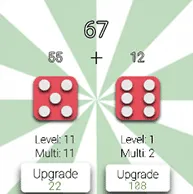
Idle Dice
A single roll seems insignificant at first — a modest number, a small payout. But idle systems thriv...
Idle
Rabbit Samurai 2
Join a brave rabbit samurai on a mission to rescue lost bees. Use your grappling hook to swing, boun...
Platformer
Heroes Assemble
Heroes Assemble is an action-packed game where you gather heroes, grow your team, and battle enemies...
Action🔍 Board Mechanics Explained
Q1: What defines victory?
Maintaining stronger territorial presence and limiting opponent expansion.
Q2: Is the game suitable for analytical learners?
Absolutely, it encourages planning, foresight, and spatial reasoning.
Q3: Is Hexa Go accessible without installation?
Yes, it runs directly in a web browser using HTML5 technology.
Q4: Does difficulty increase?
AI decision-making becomes more calculated as progression continues.
Q5: Does the hex grid change gameplay significantly?
Yes, six-directional connectivity increases tactical complexity compared to square boards.